Education and Skills during the First Industrial Revolution in England
02 Apr 2026· ,·
0 min read
,·
0 min read
Alexandra M. De Pleijt
Julius Koschnick
Patrick Wallis
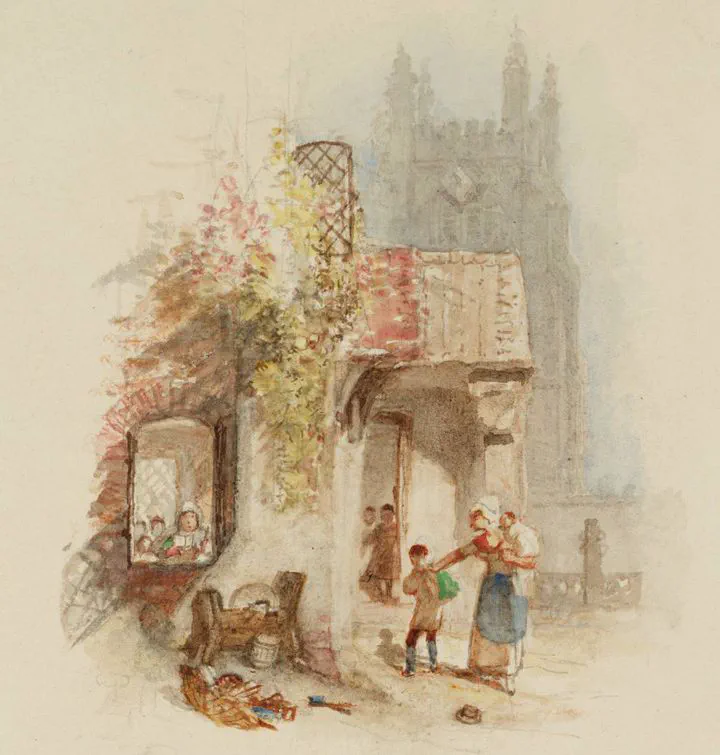 J.M.W. Turner - Going to School, for Roger’s Poems (1830)
Abstract
We provide evidence that education contributed to England’s Industrial Revolution by increasing upper-tail human capital. Contrary to the prevailing view that schooling was irrelevant to early industrialization, we show that the expansion of schooling lowered barriers to entering apprenticeships in skill-intensive trades. We introduce new parish-level data on 3,000 school foundations, 46,000 charitable bequests, and 350,000 apprenticeship contracts between 1711 and 1805. Using a staggered difference in-differences design exploiting educational endowments through wills, we show that the expansion of schooling increased apprenticeship training, particularly in occupations requiring reading, writing, and mathematical skills that were crucial for the Industrial Revolution.

Authors
Assistant Professor
I am an Assistant Professor and Marie Curie Fellow at the Department of Economics at the University of Southern Denmark (SDU), part of the Danish Institute for Advanced Study (DIAS) and the Historical Economics and Development Group (HEDG).
My research interests include long-run growth, human capital formation, knowledge transmission, and natural language processing.